
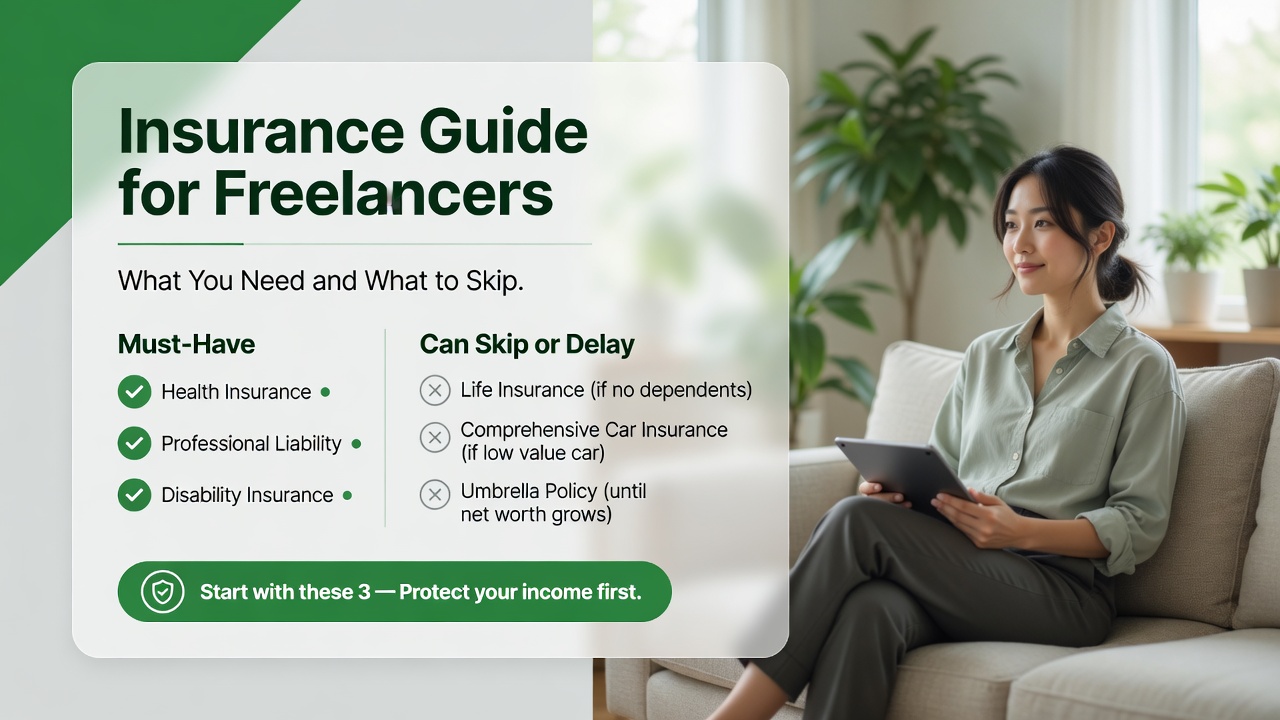
As a freelancer, you are responsible for your own insurance. No employer subsidies, no group rates, no HR department to help you choose. But skipping insurance is not an option. One accident or illness without coverage can wipe out years of savings. Here is a complete guide to insurance for freelancers.
Disclaimer: This is educational content, not insurance advice. Consult a licensed insurance broker for your specific needs.
Health insurance is the biggest concern for most freelancers. See our Health Insurance Options guide for a deep dive. This post covers all the other insurance types freelancers need.
Health Insurance
Your options are: Marketplace plans through Healthcare.gov (with potential Premium Tax Credit subsidies), private insurance through a broker, a spouse’s employer plan, COBRA from a previous employer, or membership in a professional association that offers group plans. The Marketplace is usually the best option for sole proprietors because of subsidies. Estimate your income carefully when applying, as underestimating can mean repaying subsidies at tax time.
High-deductible health plans (HDHPs) paired with Health Savings Accounts (HSAs) are worth considering. HDHPs have lower premiums and the HSA offers triple tax benefits: tax-deductible contributions, tax-free growth, and tax-free withdrawals for medical expenses. For a healthy freelancer, this combination often offers the best value.
Disability Insurance
Disability insurance is arguably more important than health insurance for freelancers. If you cannot work due to illness or injury, your income stops completely. Disability insurance replaces a portion of your income (typically 60-80%) if you become disabled. For freelancers, own-occupation disability insurance is ideal: it pays benefits if you cannot work in your specific occupation, even if you could work a different job. This covers you if you lose your ability to write code, design, or perform your specific freelance skill.
Cost: typically 1-3% of your annual income. For a 35-year-old freelancer earning $80,000, a good policy costs $80-$200 per month. Compare that to the risk of losing $80,000 of income for a year or more. Disability insurance is a no-brainer for any freelancer who depends on their income.
Liability Insurance
General liability insurance covers you if a client claims your work caused them financial harm. If you give bad advice that costs a client money, or if your code crashes their system, liability insurance covers legal fees and settlements. Professional liability (also called errors and omissions or E&O insurance) is specifically for service providers. Cost: $300-$1,000 per year depending on your field and coverage limits. Many clients now require proof of liability insurance before contracting with freelancers.
Life Insurance
If you have dependents (children, a spouse who relies on your income, or aging parents), life insurance is essential. Term life insurance is the most affordable option. A 20-year term policy for $500,000-$1,000,000 costs $20-$60 per month for a healthy 35-year-old. This replaces your income if you die unexpectedly, ensuring your dependents are cared for. Whole life and other permanent policies are more expensive and generally less suitable for freelancers. Stick with term.
Business Insurance
If you have business equipment (camera gear, computers, tools), consider inland marine insurance (confusing name, but it covers portable equipment). If you have a home office, check whether your homeowners or renters insurance covers business equipment. Most do not, or have very low limits ($2,500 or less). A separate business personal property policy costs $150-$300 per year and covers your gear against theft, damage, and loss.
| Scenario | Recommended Action |
|---|---|
| You have irregular income | Use a percentage-based budget |
| High-interest debt exists | Attack it while building mini emergency fund |
| Income dropped suddenly | Cut non-essentials first, then negotiate bills |
| Large unexpected expense | Use emergency fund, replenish over 3 months |
- Track every business expense for tax deductions
- Set aside 25-30% of each payment for taxes
- Review your budget every week (15 minutes)
- Update your income stream tracker every Friday
- Re-evaluate your rates every 6-12 months
Frequently Asked Questions
Can I deduct insurance premiums? Health insurance premiums are deductible on Schedule 1 as an adjustment to income. Disability, liability, and business insurance are deductible on Schedule C as business expenses.
How do I find a good insurance broker? Ask fellow freelancers for recommendations. Look for brokers who specialize in self-employed or freelance clients. They understand the unique needs of variable income earners.
What insurance should I prioritize? Health insurance first, then disability, then liability, then life (if you have dependents), then business equipment. Work through the list in order as your budget allows.
Insurance is not exciting, but it is essential. One uncovered event can destroy years of freelance work. Protect yourself and your business. The peace of mind is worth the premium.
How to Choose the Right Insurance as a Freelancer
Choosing insurance as a freelancer starts with understanding your risk profile. If you work from home as a graphic designer, your risks are different from a freelance electrician who works on client sites. Start with the essentials: health insurance and general liability. Then add disability insurance if your income depends on your physical ability to work. Finally, consider professional liability (errors and omissions) insurance if you provide advice or create deliverables that could cause financial harm to clients.
Use the 1% rule: if a policy costs less than 1% of your annual revenue and covers a realistic risk, it is worth buying. Get quotes from at least three providers and read the fine print on exclusions. Many freelancers overpay for coverage they do not need or underinsure against risks they face every day.
Insurance Checklist for New Freelancers
When you first go freelance, your insurance needs change immediately. Here is a checklist to work through in your first 90 days:
Week 1: Apply for health insurance through the marketplace or a professional association. Do not let this lapse. Even one month without coverage can be financially devastating if something happens. Look at high-deductible plans paired with an HSA for maximum tax efficiency. COBRA from your former employer is an option but usually the most expensive.
Week 2-4: Research disability insurance. Your ability to earn income is your most valuable asset. A policy that replaces 60% of your income if you cannot work costs roughly 1-3% of your annual income. Get quotes from Breeze, Policygenius, or a local independent agent. Look for own-occupation coverage, which pays if you cannot work in your specific profession even if you could work another job.
Month 2-3: Add general liability insurance and professional liability (errors and omissions) if applicable. Many clients now require proof of insurance before signing contracts. A business owner policy (BOP) bundles general liability and property insurance and costs $500-$1,000 per year for most freelancers. Check with Hiscox, Thimble, or Next Insurance for competitive quotes.
