

The biggest barrier to landing your first freelance client is proof that you can deliver. Clients need to see examples of your work before they trust you with money. But you cannot build a portfolio without clients and you cannot get clients without a portfolio. This chicken-and-egg problem stops most aspiring freelancers from ever starting. The solution is simple: create spec work case studies and personal projects that demonstrate your skills. Here is exactly how to build a freelance portfolio with zero clients in 2026.
The Spec Work Strategy
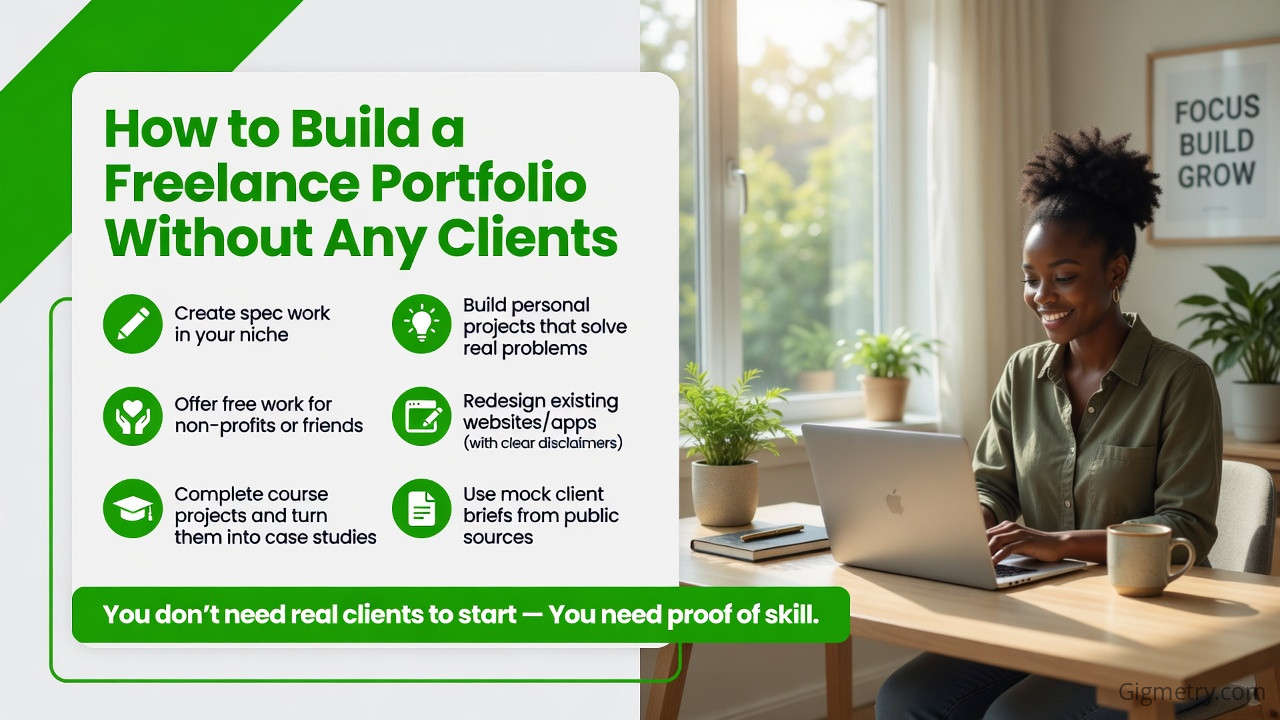
Speculative work or spec work means creating a deliverable for a real business as if they hired you. Choose a local business or a brand you admire. Redesign their logo write a sample blog post plan a social media calendar or audit their website. Package the result as a case study with the problem your process and the outcome. A freelance brand designer redesigned a local cafe brand identity for free. She created a full case study with before-and-after images and posted it on Behance. Within two weeks a different coffee shop hired her for $2,500 to redesign their brand.
Create Personal Projects
A personal project serves the same purpose as client work. A writer can start a blog on a topic they care about publish 10 articles and use those as portfolio samples. A designer can create a brand identity for a fictional company. A video editor can edit YouTube videos for a friend who is a content creator. A web developer can build a website for a nonprofit at no cost. Each project becomes a portfolio piece that shows your skills and your working style. The personal project strategy is effective because it demonstrates initiative which clients value immensely.
Leverage Open Source and Community Projects
If you are a developer contribute to open source projects. Each pull request is a portfolio piece. If you are a writer volunteer for a community newsletter or a nonprofit website. If you are a designer join a design sprint community like Briefz or Goodbrief and create daily design challenges. These all produce tangible work you can showcase. Open source contributions in particular carry weight because potential clients can review your code style and collaboration skills. Even one meaningful open source contribution can differentiate you from other freelancers.
Build a Simple Website to Showcase Your Work
A portfolio website does not need to be elaborate. A single-page site with your name your services 3 to 5 portfolio pieces and a contact form is sufficient. Use a free platform like Carrd or a simple WordPress site. Include each project as a case study with context: the client or project background your role the process and the result. Use images screenshots or mockups to make each piece visually compelling. A portfolio with three strong case studies is more effective than a portfolio with ten weak ones. Follow our freelancer starter kit for tool recommendations to build your site quickly.
Use Your Portfolio in Proposals
Your portfolio is useless if clients do not see it. Link to your portfolio in every job application include samples in cold emails and reference specific pieces in your proposals. When Devrim started on Upwork he had no client portfolio. He used personal projects and code samples from his GitHub to demonstrate his abilities. His response rate started at 10 percent and climbed to 40 percent as he refined how he presented his work. The portfolio matters less than how you connect it to the client’s specific needs. Read our cold email template for proven proposal language.
| Method | Time Investment | Portfolio Pieces Created | Client Conversion Rate |
|---|---|---|---|
| Spec project for real business | 1-3 days | 1 case study | High |
| Personal passion project | 1-4 weeks | 3-10 samples | Medium |
| Open source contribution | 1-2 weeks | 1-3 pull requests | High for dev roles |
| Pro bono for nonprofit | 2-5 days | 1 case study + testimonial | Very high |
Frequently Asked Questions
How many portfolio pieces do I need to start?
Three strong portfolio pieces are enough to start applying for paid work. Focus on quality over quantity. Each piece should demonstrate a different skill or type of project. One spec project one personal project and one volunteer project create a well-rounded portfolio. You can add more pieces as you complete client work.
Should I do free work to build my portfolio?
Yes. Pro bono work for nonprofits spec projects for local businesses and volunteering for community organizations are all acceptable ways to build your portfolio. The key is to set clear boundaries. Offer one specific deliverable for free and require a testimonial or LinkedIn recommendation in return. A freelance designer did one free cafe brand redesign and turned it into a $2,500 paid gig within two weeks.
Can I use AI-generated content in my portfolio?
Using AI tools to create portfolio pieces is acceptable as long as you disclose the AI’s role. Clients want to see your thinking process and your ability to deliver not whether you used a specific tool. Many designers now use Midjourney for concept exploration and then build on those concepts. Be transparent about your workflow and focus on showing the value you added.
How do I present spec work in my portfolio?
Frame spec work as a case study. Describe the project as a hypothetical or personal exercise. Explain the brief your approach and the outcome. Mention that the project was self-initiated. Clients appreciate the initiative and will evaluate the work on its quality not whether a client paid for it. Focus on the steps to launch and do not wait for permission to start building.
Disclaimer: This content is for informational purposes only and does not constitute financial tax or legal advice. Consult a qualified professional for advice tailored to your specific situation.

